

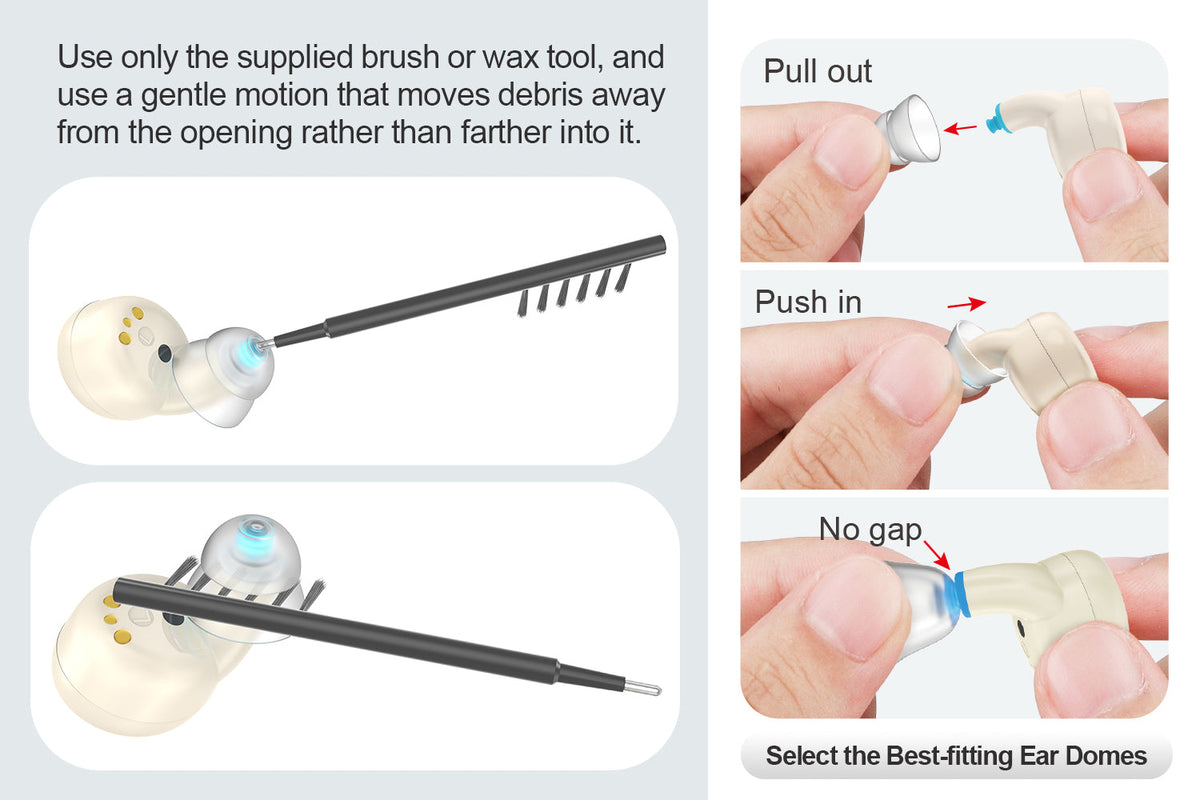
The safest way to clean a rechargeable hearing aid is to follow its instructions for use, then remove visible debris with dry tools only. A quick daily check of the ear tip, sound outlet, microphone openings, and charging contacts can help prevent wax buildup and charging interruptions. Do not use water, alcohol, or household cleaners on the device or charging case.
Quick Answer
Use this short checklist first, then follow the detailed routine below:
- Follow the cleaning instructions and use only the tools supplied or approved for your model.
- Wipe the hearing aids and charging contacts with a dry, lint-free cloth, then remove only visible debris with a dry approved brush or tool.
- Keep water, alcohol, sprays, solvents, and heat away from the hearing aids and charging case.
- Contact the manufacturer or a hearing care professional if dry cleaning does not restore normal charging or sound.
Start With the Manufacturer’s Cleaning Instructions
Your device-specific instructions are the rule to follow because hearing aid designs, ear tips, wax guards, and chargers vary. Before cleaning, identify the supplied brush, cloth, wax tool, or replacement parts, and check whether the instructions call for the hearing aids to be switched off or removed from the charger first.
If the instructions do not explain a step, do not improvise with a liquid, a pin, or a household cleaning product. The Food and Drug Administration advises users to clean hearing aids as instructed and to avoid solvents, alcohol, and water because they can damage internal electronics. It also recommends asking the manufacturer or a hearing care professional when care instructions are unclear. FDA hearing aid care advice is a useful starting point for general device-care questions.
Set up a small, dry cleaning spot with good light. A soft, lint-free cloth and the tools provided with the device are usually enough for routine care. Keep the charger on a stable surface and unplug it before cleaning its contacts unless the manufacturer says otherwise.
Build a Simple Daily Cleaning Routine
A short routine works best because fresh wax and moisture are easier to remove than buildup that has dried in place. Make this check part of taking the hearing aids out at night, before placing them in their charging case. Regular inspection is consistent with federal and hearing-health advice to keep devices dry, clean them as instructed, and check them often.
Wipe the Device With a Clean, Dry Cloth
First, wipe the outside of each hearing aid with a clean, dry, lint-free cloth. Focus on areas that touch the ear and skin, including the shell, the part behind the ear if present, and the outside of the ear tip. This removes surface oils, perspiration, and loose debris without pushing moisture into openings.
Do not soak the cloth or spray anything directly onto the device. If the hearing aid was exposed to rain, sweat, or another source of moisture, follow its instructions for drying and wait until it is fully dry before returning it to the charger. The American Academy of Audiology’s maintenance overview also emphasizes keeping hearing aids dry and clean.
Inspect the Ear Tip, Sound Outlet, and Microphone Openings
Next, look for visible wax or debris where it can block sound. Use only the supplied brush or wax tool, and use a gentle motion that moves debris away from the opening rather than farther into it. Do not push an object down the sound outlet or microphone opening.
Check these points each day:
- The ear tip or dome for visible wax, cracks, discoloration, or a loose fit.
- The sound outlet and wax guard for blockage or reduced sound output.
- The microphone openings for lint, makeup, or residue.
- The device body for moisture, damage, or a change in how it fits.
If a wax guard or ear tip is designed to be replaced, use the replacement schedule and parts listed in the instructions. Persistent feedback, weak sound, or a visible blockage that does not clear with the approved tool calls for manufacturer support or a hearing care professional. The National Institute on Deafness and Other Communication Disorders notes that earwax can damage hearing aids and that a clogged aid can contribute to feedback.
Clean Charging Contacts Without Using Liquids
Dry cleaning is the safer default for hearing aid charging contacts. Before cleaning, remove the hearing aids from the charger, switch them off if the instructions require it, and disconnect the charging case from power. Then use a dry, lint-free cloth to wipe the metal contact areas on both the hearing aids and the charger.
Use a clean, dry, soft brush only if the manufacturer permits it and visible debris remains around the contacts. Brush lightly around the contact area. Do not scrape the contacts with metal, press a tool into the charging wells, or apply contact cleaner, alcohol, water, wipes, or compressed-air products unless the product instructions explicitly approve them.
Use this quick checklist before charging:
| Checkpoint | What to Look For | What to Do |
| Hearing aid contacts | Wax, skin oil, moisture, or lint | Wipe with a dry lint-free cloth |
| Charger contacts | Dust or loose debris in the wells | Use a dry approved brush if needed |
| Charging fit | Aid does not sit flat or indicator does not respond | Re-seat it once after checking for debris |
| Repeated charging failure | Contacts appear clean but charging still fails | Stop troubleshooting and contact support |
After cleaning, place each device in its proper charging position and check the normal charging indicator described in the instructions. If the indicator does not appear, do not keep forcing the fit or repeatedly scrape the contacts. Confirm the charger has power, re-seat the aids once, and contact the manufacturer if the problem continues. A hearing care professional can assess problems that do not resolve with the device’s approved cleaning process.
Keep Wax, Moisture, and Hair Products Away From the Device
Prevention is usually easier than deep cleaning. Remove rechargeable hearing aids before showering, swimming, or using hair spray, dry shampoo, styling products, or cosmetics near the ear. Put them back in only after hair and skin are dry and any product mist has settled.
Wax needs a separate approach from device cleaning. Do not try to reach into your ear canal with a cotton swab or another object to protect the hearing aid. That can push wax deeper into the ear. MedlinePlus earwax information advises against inserting objects into the ear canal and notes that hearing aid users should have excess wax checked regularly by a health care provider.
At the end of the day, place the hearing aids in their charger or the storage method specified for the model. Keep the case away from bathroom steam, direct sun, a hot car, and sinks. For people who sweat heavily or live in a humid area, ask the manufacturer or hearing care professional whether a compatible drying solution is appropriate for a rechargeable hearing aid.
Avoid Cleaning Methods That Can Damage Hearing Aids
The wrong cleaning method can cause more trouble than a little wax. Keep the process dry, gentle, and limited to approved tools. A hearing aid is a small electronic device, so its openings, seals, battery system, and charging hardware should not be treated like washable earbuds or glasses.
Avoid these methods:
- Water, soap, soaking, or rinsing the hearing aid or charger.
- Alcohol, solvents, disinfectants, household sprays, or contact cleaners.
- A hair dryer, microwave, radiator, direct sunlight, or another heat source used to dry the device.
- Metal picks, needles, sharp tools, or forceful scraping around the sound outlet or charging contacts.
- Unapproved replacement wax guards, ear tips, or accessories.
The FDA specifically warns against liquids and heat on hearing aids, and it advises users to keep hair-care products away from the device. If you are unsure whether a product is safe, leave it off the hearing aid and consult the instructions instead. For broader hearing-aid background and appropriate care expectations, see MedlinePlus hearing aid information.
When to Contact the Manufacturer or a Hearing Care Professional
Ask for help when cleaning does not restore normal function or when the device seems damaged. You should not attempt a repair at home if a charging contact is bent, loose, corroded, or missing, if the case gets unusually hot, or if the hearing aid has been immersed in liquid.
Contact support or a hearing care professional when you notice:
- A charger indicator that does not respond after one careful re-seat.
- Ongoing feedback, weak sound, distortion, or no sound after approved cleaning.
- Pain, irritation, drainage, sudden hearing changes, or a suspected wax blockage in the ear.
- Cracks, damaged ear tips, a loose wax guard, or physical damage to the device or case.
Hearing aids do not replace medical evaluation when symptoms change. Adults with perceived mild to moderate hearing loss may have over-the-counter options, but the FDA’s hearing aid information explains that some hearing concerns call for evaluation by a licensed clinician. When a device problem and an ear-health concern happen together, prioritize professional care over further cleaning attempts.
Make Daily Device Care Part of Your Routine
Keep your rechargeable hearing aid working reliably by cleaning it gently, keeping it dry, and checking the charging contacts before problems build up. Use the device instructions as your first reference, and stop when a dry cloth or approved tool does not solve the issue. Explore our rechargeable hearing aid options when you need a charging-case device, then keep its instructions close for ongoing care.
Frequently Asked Questions
Q1: Can I use alcohol wipes on rechargeable hearing aids?
No. Use a clean, dry, lint-free cloth unless the device instructions specifically approve another method. The FDA cautions against alcohol, solvents, and water because they may damage a hearing aid’s internal electronics.
Q2: How often should I clean hearing aid charging contacts?
Check them daily and wipe them when you see oil, moisture, wax, or lint. A brief dry check before charging is usually more useful than waiting for a charging problem to appear.
Q3: What should I do if my hearing aid will not charge after cleaning?
First, confirm the charger has power and re-seat the hearing aid once in its correct position. If the charging indicator still does not respond, contact the manufacturer or a hearing care professional instead of scraping the contacts or adding liquid.
Q4: Can I clean earwax from inside my ear with a cotton swab?
No. Cotton swabs and other objects can push wax deeper into the ear canal. If you think wax is affecting hearing or device fit, ask a health care professional to assess it.
Q5: Should I use a drying box with rechargeable hearing aids?
Maybe. Some devices have specific heat or charging restrictions, so check the instructions or ask the manufacturer before using a drying box, dehumidifier, or other moisture-control accessory.


Leave a comment
This site is protected by hCaptcha and the hCaptcha Privacy Policy and Terms of Service apply.